Deciding when and how to retire is one of the major transitions we help clients work through.
Naturally, a large part of this decision comes down to the numbers, and one key question we help clients answer is, “Am I going to be okay?”
While a financial plan can help show whether you can afford to stop working, it doesn’t always tell you whether you should.
Having worked with many families through this transition, some of whom settled more easily than others, we’d like to share what we have learnt.
When You Have Had Enough
In our experience, when clients start talking about a retirement date, it is often because they have had enough of work.
Sometimes this feeling comes on suddenly, after a restructure, a new manager or a particularly hard year. For other people, it builds over years of commitments and deadlines, as their willingness to put up with stress and long days slowly wears thin.
When the decision to retire is made mainly to get away from something, it is easy to overlook what else work provides: structure to the week, people around us, a sense of purpose, and challenges that keep our minds active.
We have seen capable, well-funded people retire with every financial box ticked, only to find themselves unsure what to fill their coming days with.
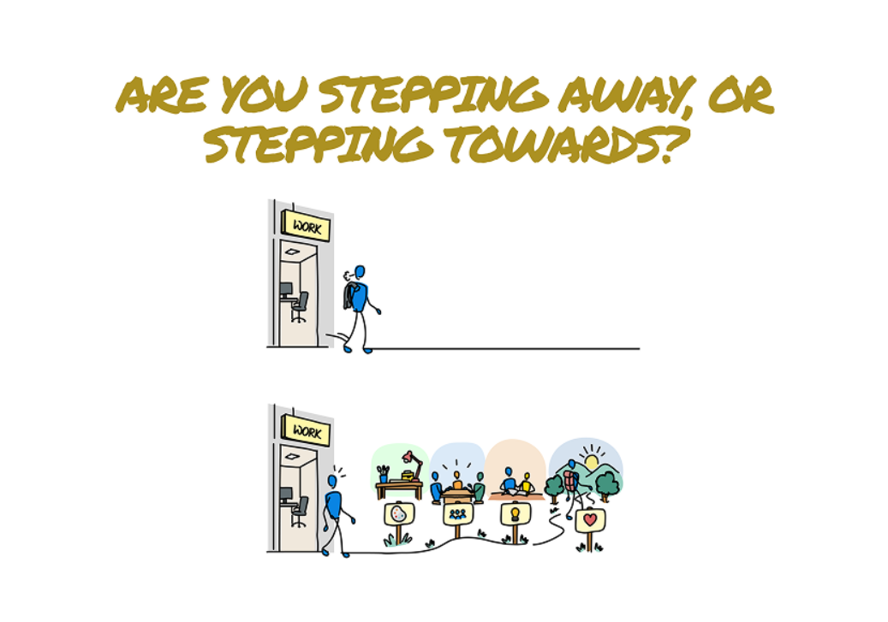
While having had enough can be a perfectly good reason to stop working, we believe it helps to be just as clear about what you are retiring to.
Something to Step Towards
The benefits that work provides don’t have to come from a job. Here are a few examples of how you can still enjoy them in retirement.
Structure. Work gives us a reason to get up in the morning. Without this structure, days can start to blur together. The same shape can come from any regular commitment, such as a weekly volunteering shift, a course, a set day for golf or training, or a fixed day looking after the grandchildren.
Connection. Work surrounds you with colleagues without any effort on your part. Finding ways to continue connecting with other people is a vital part of retirement. You can do this through a club, a walking group, regular lunches with old friends, or more time with family who will be glad to see more of you.
Purpose and worth. Work gives many people the feeling of being needed and good at something. That can carry over into mentoring younger people in your field, serving on a committee or board, or helping to raise grandchildren. Roles like these usually come through people you already know, so they are often easier to line up while you are still working than after you have left.
Stimulation. Work keeps your mind busy with real problems. Learning a language or an instrument, studying, or taking up a craft or sport can do the same. It helps if the pursuit keeps challenging you and involves other people, whether that is a class, a club, or a group of fellow enthusiasts.
A successful retirement requires planning for these benefits, and that can take time and experimentation. The earlier you start, the better.
Deciding When to Go
We encourage clients to make the retirement decision not on the money alone, but also on a clear understanding of what they are retiring to.
There will be many days when you are glad to be free of the stress of work. But without a plan for how you will still find structure, connection, purpose and stimulation, you may find yourself missing what work gave you.
The money is what we are asked about most, but our aim has always been to help you make a happy and successful transition, and that includes the life you are retiring to.
When we next review whether your plan works, we would also be glad to hear how you plan to spend your time.
😀 Rational Optimism
The media is not a friend of the disciplined and patient investor. Ignoring the key determinants of lifetime investor returns, the media focuses on short-term returns, market predictions, and negative news.
We present the following as an antidote to the onslaught of negative news:
Despite Some of Europe’s Worst Wildfires in Decades, Deaths Remain Low
London’s First Supervised Self-Driving Taxi Service Debuts
Global Health Workforce Nearly Tripled Since 1990
📰 Read
How to Outlive Your Bucket List [8 minutes]. A list of what sounded good on the day you wrote it.
Shocking Activity [3 minutes]. Why doing nothing is the hardest thing to do.
Badge vs Scoreboard [4 minutes]. Why the ratchet on spending only ever turns one way.
Finding A Balance [5 minutes]. The one expense missing from the statement.
The Myth of Owning Your Time [7 minutes]. Freedom you never use is the same as not having it.
Money is power [11 minutes]. Money is stored power, and spending drains the battery.
🎧 Listen
Counting the Cost [6 minutes]. Ask not only what you want, but what it will require of you.
🍿 Watch
Want to Be Happier? Stay in the Moment
🖼️ A Picture is Worth a Thousand Words
How London Property Prices Compare to the World