
Beware the Fear Mongers When Investing
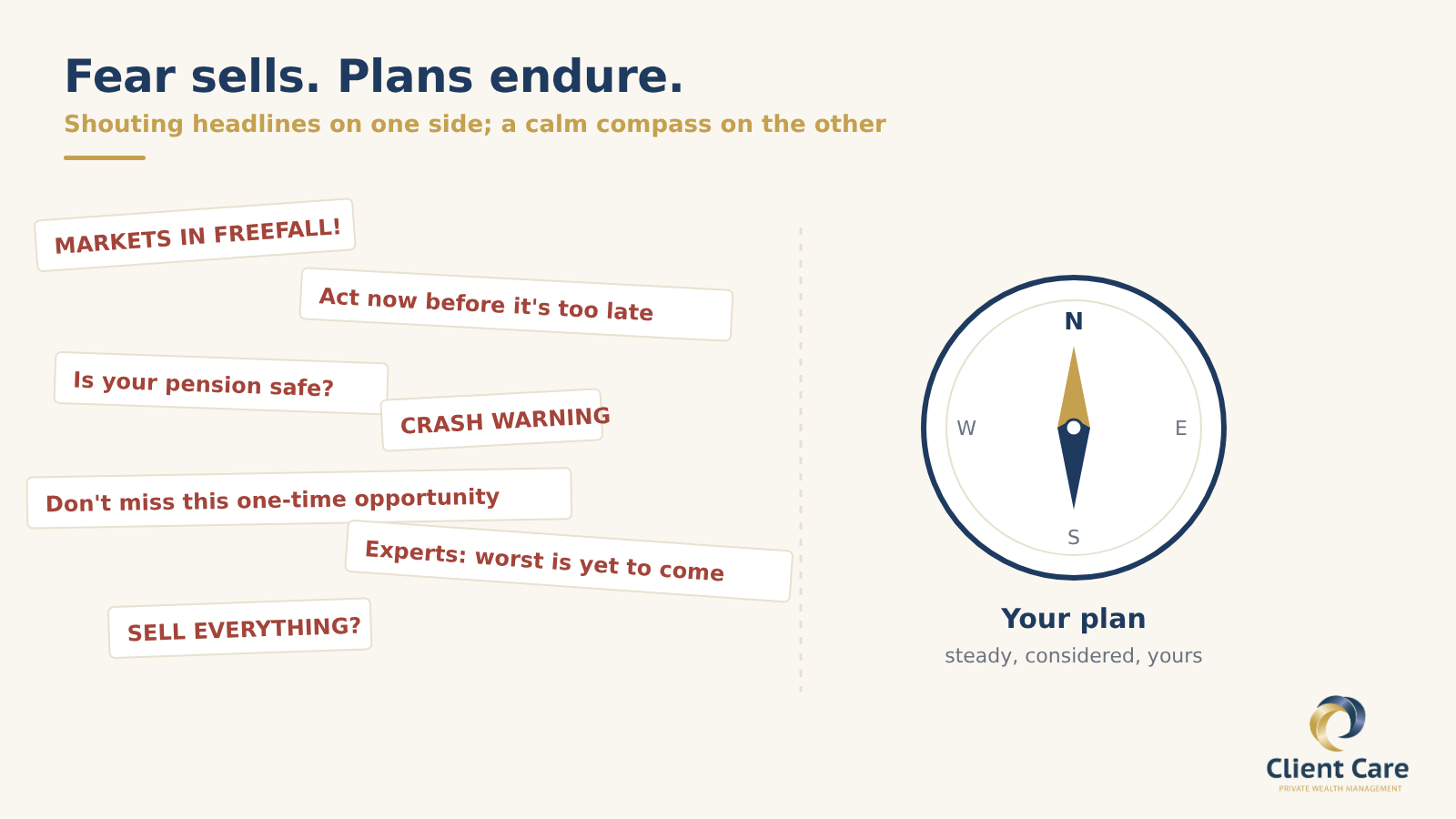
Over the past 35 years, I have sat across the table from many people who arrived at my office feeling anxious. More often than not, nothing had actually gone wrong in their own lives. Someone had simply frightened them. It might have been a dramatic headline, a WhatsApp forward, a smooth talker at a dinner party or, sadly, sometimes another adviser.
Fear is a remarkably effective sales tool. It grabs our attention, creates a sense of urgency and quietly switches off the calm, sensible part of our thinking. That is exactly why I want to gently encourage you to be wary of anyone who uses it to steer your money decisions. An adviser who leans on fear is not adding real value. They are stirring up emotion, and emotion is a poor guide when it comes to investing.
Fear and FOMO: the quiet wealth destroyers
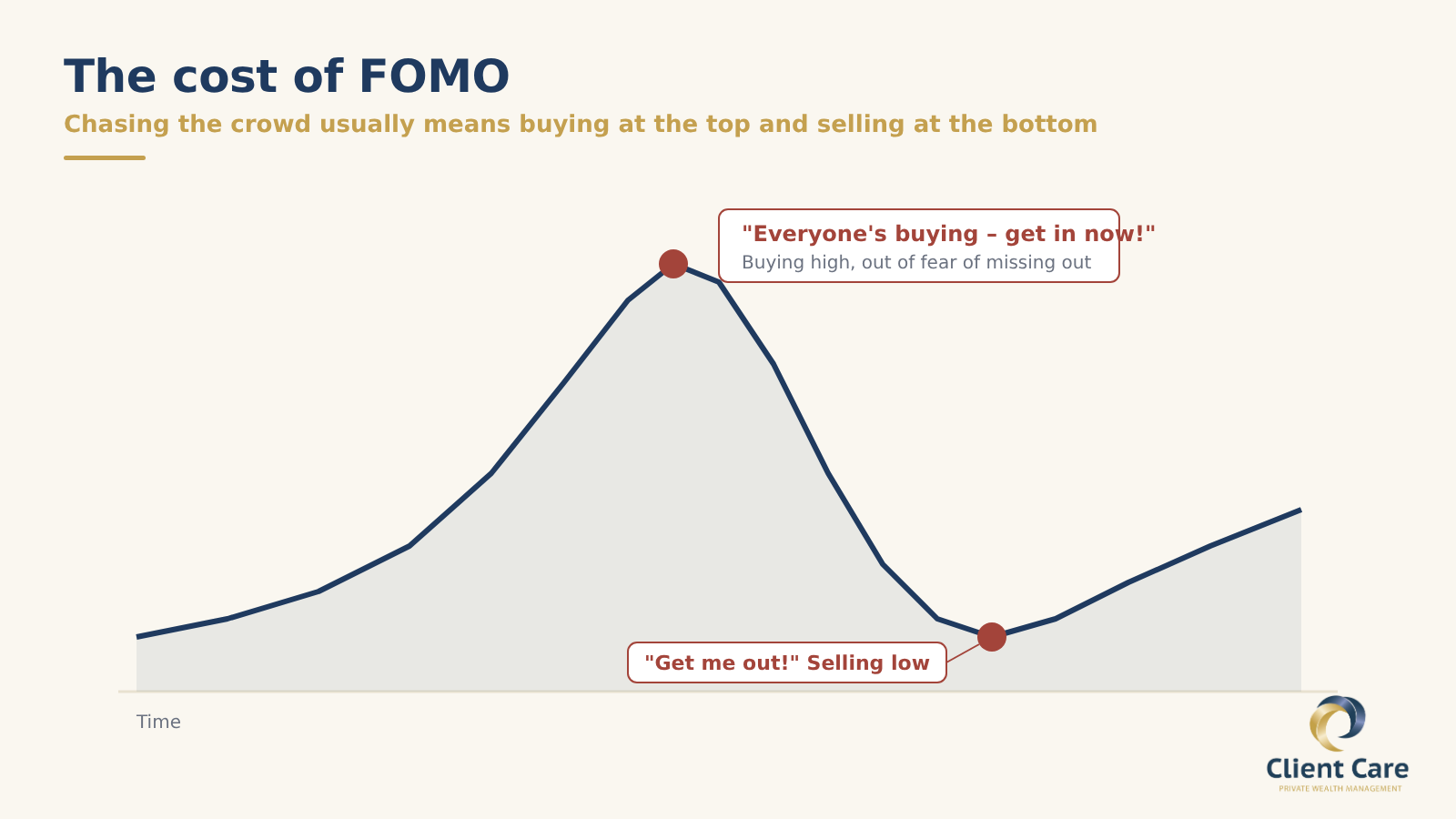
The fear of missing out, or FOMO, has probably cost more people money than it has ever made them. Every few years there is a new “sure thing”: a sector, a share or a scheme that everyone around the braai seems to be talking about. The trouble is that by the time something is popular enough to be discussed over the coals, most of the growth has usually already happened.
So people buy in near the top. The excitement fades, prices fall, and a different fear takes over: the fear of losing everything. Then they sell near the bottom. Buy high, sell low. Nobody sets out to do it, yet it is one of the most common ways I have seen ordinary, sensible people lose money. A good adviser should never make you feel rushed. Their job is to help you slow down.
When the tax tail wags the dog
Paying less tax is a perfectly legitimate part of good financial planning. Retirement annuities, tax-free savings accounts and, in the right circumstances, other structures all have their place, and using them well makes a real difference over time.
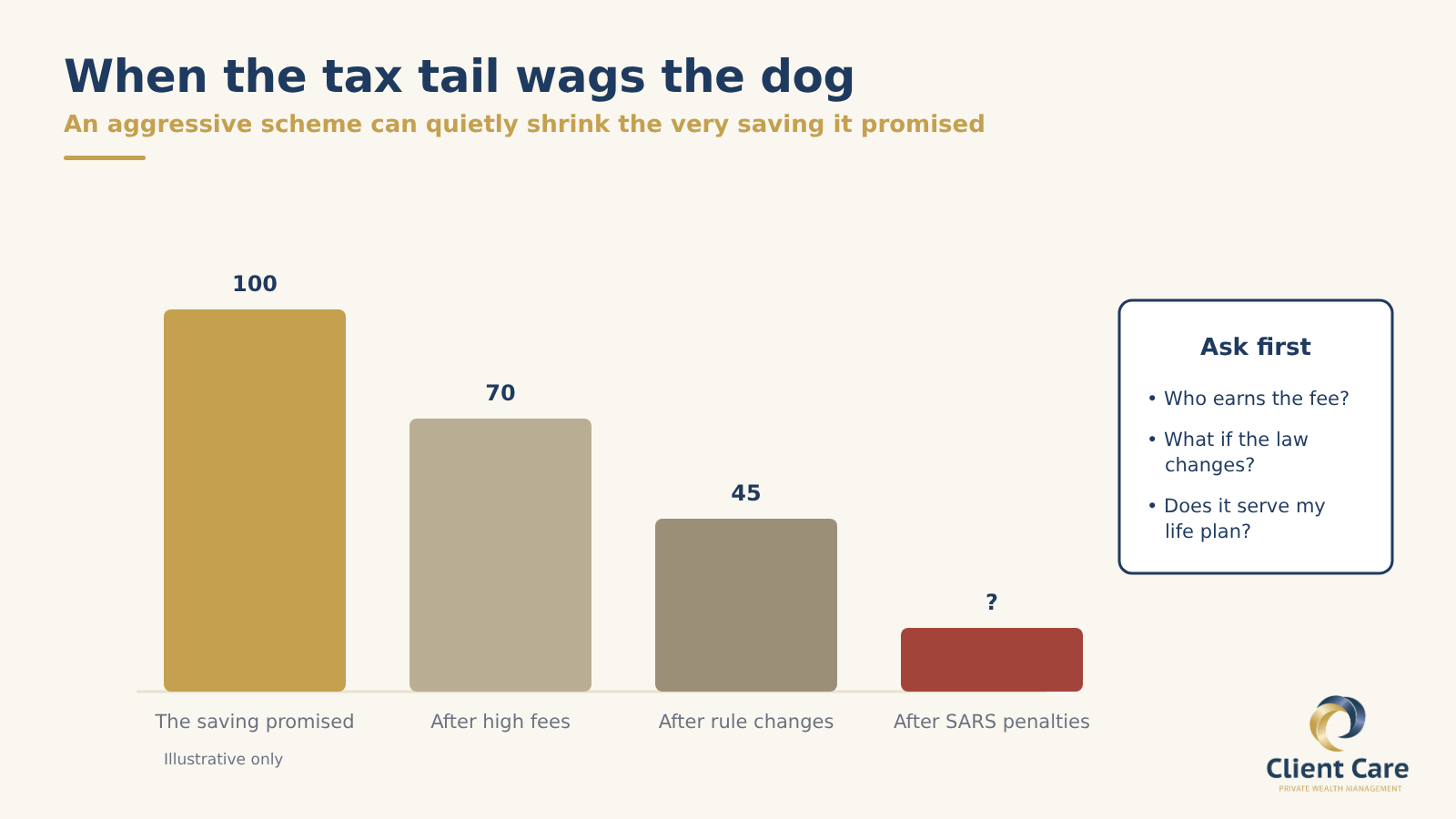
Where I become cautious is when tax is the main selling point. Some schemes sound wonderfully clever, and anything that sounds too good to be true usually is. Tax laws change, SARS has become very good at closing loopholes, and aggressive structures can unravel, bringing audits, penalties and interest along with them. On top of that, the fees attached to complicated tax schemes are often high and not always obvious, slowly eating into the very saving that was promised.
There is an old saying that you should never let the tax tail wag the investment dog. A tax saving is only worthwhile if it serves the life you are trying to build.
Start with the life, then the money
Investing without a plan is a bit like setting off on a road trip without knowing where you are going. You will use plenty of fuel, but you may not end up anywhere you want to be. That is why my conversations with clients start with life rather than money. What does a good life look like for you? When would you like to stop working? Where would you like to travel? How would you like to help your children and grandchildren?
Once we know that, your investments have a purpose. We can see how much is needed, and when, and how much risk you actually need to take, which is often less than people expect. And here is the reassuring part: when you can see clearly that your lifestyle is taken care of, the scary headlines lose much of their power. A market dip becomes a bump in the road rather than a crisis.

Fear and greed: two old enemies
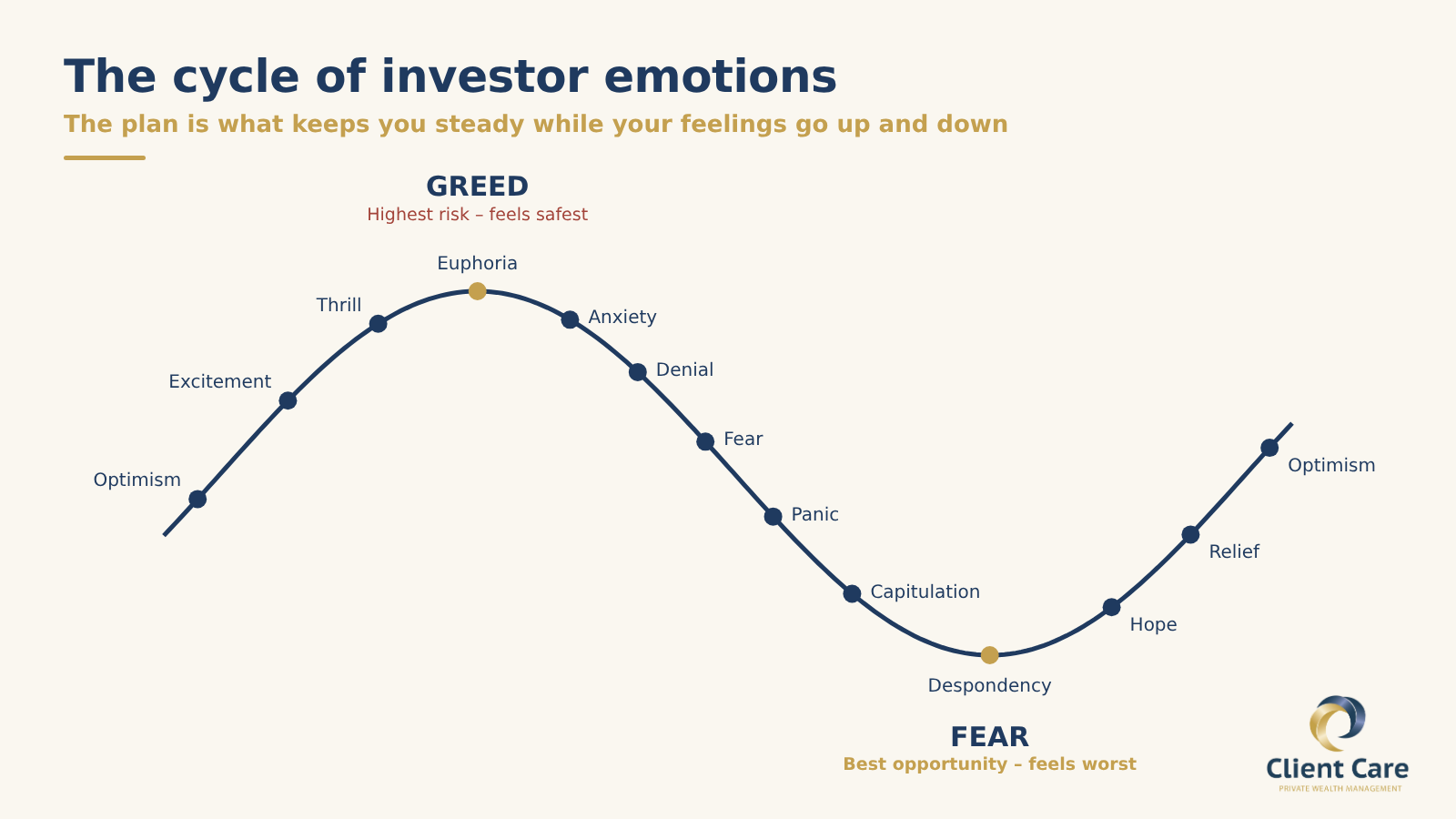
If I had to name the two biggest reasons people fall short of their investment and lifestyle goals, it would be fear and greed. Fear leads to panic selling when markets fall. Greed tempts us into taking chances when markets are flying high. Both cloud our judgement and pull us away from the plan.
The cruel irony of the cycle is that we tend to feel most confident when the risk is highest, and most hopeless just when the opportunity is greatest. I have watched this play out more than once over my career, and each time the clients who stayed the course came through in far better shape than those who let their feelings take the wheel. Our emotions are not a flaw; they are simply human. A clear plan, and a steady hand alongside you, helps make sure you do not act on them at the worst possible moment.
At the end of the day
Be wary of anyone who uses fear to guide your investment decisions, whether it comes from a headline, a hot tip or a tax scheme that sounds too good to be true. Look instead for someone who takes the time to understand your life, builds a long-term plan around it, and helps you stay calm when the world gets noisy.
Money is meant to give you choices and peace of mind. Investing should be a way of enriching your life, not a source of anxiety. If something you have read or heard has left you feeling uneasy, please give us a call. Very often, a cup of coffee and a quiet look at your plan is all it takes to put things back in perspective.